
Barbados and the Caribbean islands remain irresistible tourist havens, but the declining interest in cricket is alarming, says KEN PIESSE.
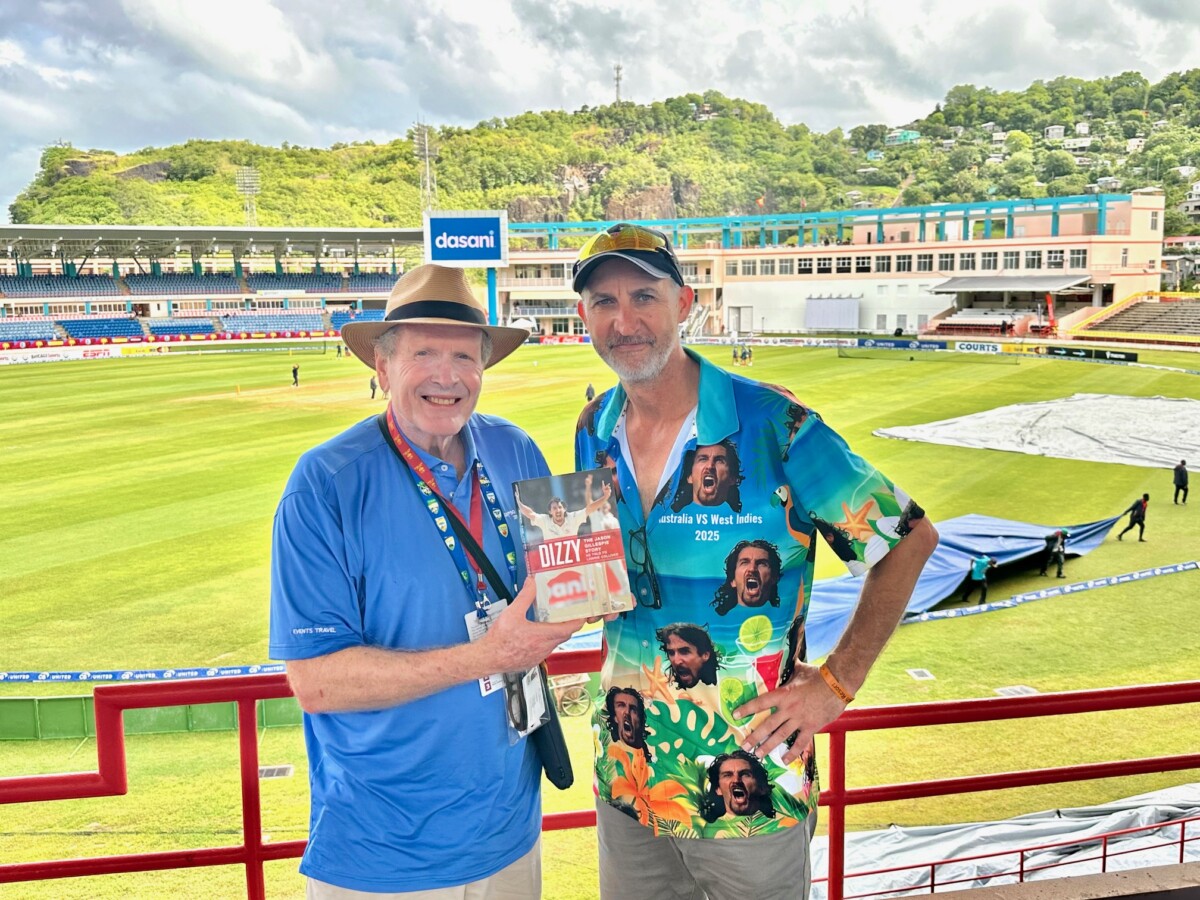 Far away Barbados has always had a mesmeric hold for those of us passionate about cricket. Known for its extraordinary arsenal of cricket legends and pop princess Rihanna, the Caribbean cricketing Citadel lives and breathes the game. Or used to.
When England and Australia tour, the fever for the game is at its zenith. Or should be.
All Test week in June, the Australians were escorted to and from Bridgetown’s iconic Kensington Oval by motor bike police, their sirens wailing to clear the path of the buses being led Indian file often onto the wrong side of Bridgetown’s narrow Highway 7 in scenes straight out of ‘All the President’s Men’.
It’s Bajan tradition, reserved only for visiting cricket teams and for Rihanna, born and bred just a few Shamar Joseph straight drives directly north of the ground. She returns regularly for Crop Over, when there is standing room only at the island’s 150 rum shops, or ‘universities’ as the locals like to call them – places of learning.
Cricket is still king in this wondrous island outpost, but patience is fraying. Younger locals complain that cricket has become elitist. Current players are accused of being mercenary and playing for the wrong reasons, unlike their famous predecessors from cricketing knights Frank Worrell and Garry Sobers through to Gordon Greenidge and big Joel. Only a few bothered to attend the three days of the Test. Offers of complimentary tickets were dismissed with a ’No thanks maan’. A new Sobers, Lara or Ambrose is desperately needed to arrest the sliding status of West Indian cricket.
Even the most passionate are dismayed by their national team’s alarming demise, which saw the Windies slip to 10th in the Test ratings having been bowled out twice in under 35 overs in Bridgetown and Grenada. Bajans like winners, not teams that disintegrate in a session.
Less than 10,000 bothered to attend, we Australians outnumbering everyone else at Kensington Oval, despite the admittance charge for locals of just five Bajan dollars. (We pre-paid $A100 per day).
One of the stands, the Hewitt & Inness, barely had 60 people in it all match. Had it been a Twenty20 the whole ground would have been full.
Aside from its three pacemen Jayden Seales and the two Joseph’s, Shamar and Alzarri, the rest of the West Indian Test team is mediocre, most little better than glorified club cricketers. Collectively they fumbled seven catches in Bridgetown, six from Joseph, who hails from the backblocks of Guyana and bowls like the wind. Alzarri was even quicker at Sabina Park. Heaven forbid if they ever waver and defect to white-ball franchises.
Early on the third morning of the series, in Bridgetown, Travis Head, on 21, steered Shamar at comfortable height just to the right of second slipsman Justin Greaves. It was directly in our eyeline in the Three Ws Stand: a ‘soda’ – a regulation catch to be taken 99 times out of 100. But down it went. Again. Rather than the West Indies chasing around 200, the contest disintegrated. Greaves should have been made to stand in the naughty corner. The best slipper in the Caribbean, Jason Holder, was in America playing T20 for Los Angeles.
What had promised to be a classic David v Goliath finish and one of the great days in West Indian cricket became a massive anti-climax. Game over. Series done.<p>
Barbados’ new Kensington Oval was almost unrecognisable from the 1999 version when we previously visited. It had been rebuilt for the 2007 World Cup and had kept only the Hall-Griffith Stand… and its swimming pool.
St. George’s Grenada was more rustic, more ‘West Indian’ with its exotic rain forest, little houses dotted up the hills at both ends and an array of pop-up shops outside selling chicken and rice through to rum and whisky. From our vantage spot, just behind the ground-staff, we could see the rain coming over the mountain. Once they rushed the covers on in bright sunshine while play was in progress. Within seconds there was a dumping.
In Jamaica, four men muscled the old-fashioned heavy roller up and down the wicket. The once-ostracised Lawrence Rowe returned for the first time in a Test match in 30 years and was treated regally. A statue of George Headley was much photographed. He was the first black man to captain the West Indies. So good was George that some called Don Bradman ‘The white Headley’.
In Bridgetown, statues of living legends Wes Hall, Charlie Griffith and Garry Sobers adorn the main entrance leading to the Weekes, Worrell and Walcott Stand. ‘Sobie’ was among the special guests in Day 1 as part of the celebrations marking 50 years since the Windies won cricket’s first World Cup in 1975. Now almost 88, he stood quietly waiting for the lift. Alongside were three of his old teammates Clive Lloyd, Lance Gibbs and Deryck Murray. I shook his hand and said: ‘Greg Chappell in Adelaide passes on his best Garry.’ He smiled and said: ‘How is Greg?’
From his young teens Chappell had idolised Sobie, who spent three wonderful years with South Australia immediately after the famous 1960-61 tour. Only the South Africans dare question Sobers’ standing as the game’s elite allrounder of the last 100 years.
Sobers is among those honoured in Barbados with official National Hero status, alongside prominent lawmakers, politicians and those who fought to abolish slavery.
Close to the Bridgetown CBD is a Garfield Sobers roundabout. The three Ws are similar honoured on nearby arterials.
Before heading for Grenada and the second Test, we circumnavigated the island, starting up the west coast where Rihanna has a $US20 mill condo and visited some club grounds, Maple CC in Holetown – where the English first settled in the early 1620s – and further north to Shorey Village and the Conrad Hunte Sports Club, named in honour of the flamboyant 1960-61 Calypso opener.
Maple has short straight boundaries, a little like Glenferrie Oval, Hawthorn FC ’s old home base in Melbourne. In his tearaway pomp, Kemar Roach, the club’s most famous playing son, would all but kick off the corrugated iron fence which doubles as a sightscreen. So low-lying is the ground that it is easily saturated, but play still goes on, 3s and 4s being given instead of 4s and 6s.
On our visit the pitch was the colour of an Australian copperhead, totally devoid of grass but our cricket-loving guide insisted that the curator could get a wicket up ‘within a week’, using grass clippings to ‘green it up’. As we were walking off, I almost stepped on an old, sodden cricket ball. It was white.
Conrad Hunte’s was huge, like the Melbourne Cricket Ground, only bigger. Some goats grazed at cow corner, totally unfazed by our group of Aussie cricket aficionados traipsing around the outfield.
The straight hit boundaries would have tested even Viv Richards, being 90 metres to the south and 100 to the north, almost twice the size of the straight boundaries at Maple.
Our guide took us past the small club ground where Fidel Edwards once played. He’d first been selected for the West Indies after just one match for Barbados. Brian Lara had spied him in the nets and demanded he be selected immediately. There was a game going on: white ball, coloured clothing. Not a set of creams in sight. At St. Michael’s secondary school, a young Hayley Matthews had played alongside Jofra Archer. They would have been hard to beat. We also passed Combermere, another of Barbados’ most renowned free schools, established 1695 – Rihanna’s old alma mater.
There are more than 100 cricket clubs in Barbados – the local season being put on hold for a fortnight to allow everyone to attend the Test. But what happened? Where were they all?
Surprisingly, to us, the fervour for cricket in the Caribbean was strongest in Jamaica, where the rhythm of reggae meets the reverence of Test match cricket. While the pitch wasn’t as shiny as I’d hoped, the crowds were passionate, loud and involved, especially when the Joseph ‘twins’ were at their intimidating best. On the Sunday night under lights, Alzarri bowled the most ferocious over Test cricket has seen since Jofra Archer downed Steve Smith at Lord’s. He was like Typhoon Tyson reincarnated, bowling at speeds approaching 150km/h. That five minutes was unforgettable and worth the endless hours of flying just to say: ’We were there’.