
For all of Gubby Allen’s extraordinary contributions, on and off the field, his key involvement in the 1932-33 Bodyline series remains the signature six months of one of the most dynamic and influential cricketing lives.
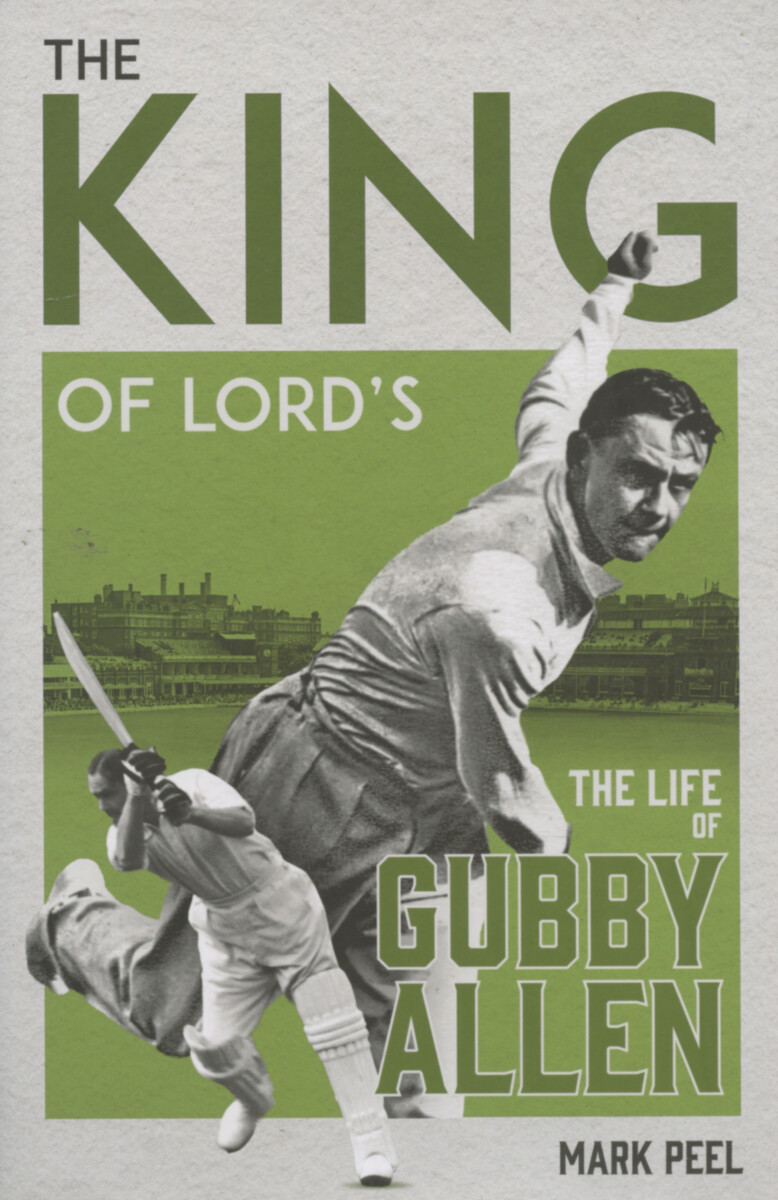 By bravely refusing an edict from his captain Douglas Jardine to bowl bouncers directly at the Australian top-order, Allen all but signed his own death warrant.
The two rowed fiercely, Jardine saying he’d send Allen home on the spot and Allen threatening to ‘tell (MCC secretary) Billy Findlay everything’ on his return. Jardine would be disgraced for bringing cricket into disrepute. Never would he captain England again.
Jardine backed down and Allen played every Test, bowled so impressively to orthodox fields he remained a frontliner alongside the two Bodylining pacemen Harold Larwood and Bill Voce, his 21 wickets important in the series win alongside Larwood’s 33 and Voce’s 15.
In letters home, Allen describes Jardine ‘as a perfect swine… loathed everywhere he goes – more than any German who ever fought in the war. Sometimes I feel like I should like to kill him and today is one of those days (after Jardine had refused his request to remain with relatives in Sydney over Christmas rather than join the team in Hobart).’
He describes Larwood and Voce as ‘gutless, uneducated miners’. In return, Larwood claimed Allen had refused to bowl Bodyline purely ‘to keep his popularity’.
Sydney-born – one of his uncles had played for Australia – Allen’s business career often took priority but he toured Australia twice, the second time for the ‘Goodwill series’ in 1936-37 as England’s captain.
A blue-blood and ‘an inveterate snob’, as described by author Mark Peel, Allen averaged only six matches per year at Middlesex and when suddenly called up for his Ashes debut at Lord’s in 1930 ahead of Larwood, one newspaper called his selection ‘extraordinary’, questioned his Australian birth and asked why he had been selected ‘ahead of several English-born players Larwood and Andy Sandham’.
Allen took none for 115 and made 3 and 57 in the famous match where Don Bradman’s impeccable 254 allowed Australia to square the series 1-1. During the match, Gubby’s father, Sir Walter Allen was chatting with past batting great Archie MacLaren about Bradman’s dominance. ‘Yes, I know he’s pretty good,’ said MacLaren, ‘but he’s got a lot to learn.’
‘Look here Archie,’ said Sir Walter. ‘If he learns much more, he’ll ruin the game!’
Allen didn’t return to Test cricket for 12 months, when he took three wickets and became the first from No. 9 to score a Test match century, against New Zealand again at his home ground, Lord’s.
A wonderfully rhythmic fast bowler, with a flowing, classical action, he had the ability to make the ball ‘hurry’ off the wicket. He was short of the express pace of the 19th Century paceman Tom Richardson, but still brisk at around Josh Hazlewood’s pace and could swing it out and seam it back in.
A vigorous upholder of the amateur ethos, he insisted on being addressed as ‘Mr’ or ‘Sir’ and on tour liked the fact that the amateurs had access to superior accomodation, changed in separate dressing rooms and entered the field by their own gate.
A bachelor all his life, he preferred his own company and said his idea of a perfect Saturday night was to sit in a comfortable cinema with a packet of boiled lollies watching a romance film.
Life was complicated for him as England’s captain. He had no trusted offsiders to assist with any of the extra duties and became frustrated at the extraordinary calls on his time. ‘No one ever gives me a moment’s peace,’ he wrote in another letter home. He had to decide on everything from tips, rooms, train travel arrangements and interviews.
In a letter home to PF ‘Plum’ Warner, one of his greatest allies, he said he often felt like ‘lying down and dying’.
On the three-day journey from Perth to Port Augusta, he encountered Aboriginals for the first time. ‘They really are ghastly sights and the sooner they die out the better,’ he was to write.
His letters home also included his opinion on world affairs, like in 1936-37 when he castigated King Edward VIII for abdicating for ‘that woman’ (Mrs Wallis Simpson).
Mark Peel’s research is exhaustive and entertaining. He talks of a match in which Allen represented the Eton Ramblers and took an important wicket. ‘The not out batsman (at Allen’s end) turned to him and commented: “You’re frightfully keen, aren’t you? Anyone would think you’re playing for England!” Allen just smiled and was happy to remain anonymous.
In another club match, he filled-in at the 11th hour as ‘Mr Smith’. Opening the batting the made a run-a-minute century and as he was walking off to standing applause, a voice from the pavilion boomed: ‘Mr Smith indeed.’ ‘He’s GO Allen and I saw him make 122 for England against New Zealand at Lord’s last week!’
Allen’s roles after cricket included his efforts, alongside Don Bradman to stamp out throwing. He was also chairman of selectors during the controversial 1956 Test matches which featured farcical, dusty wickets which saw Jim Laker and Tony Lock dominate like never before. Or again.