Description
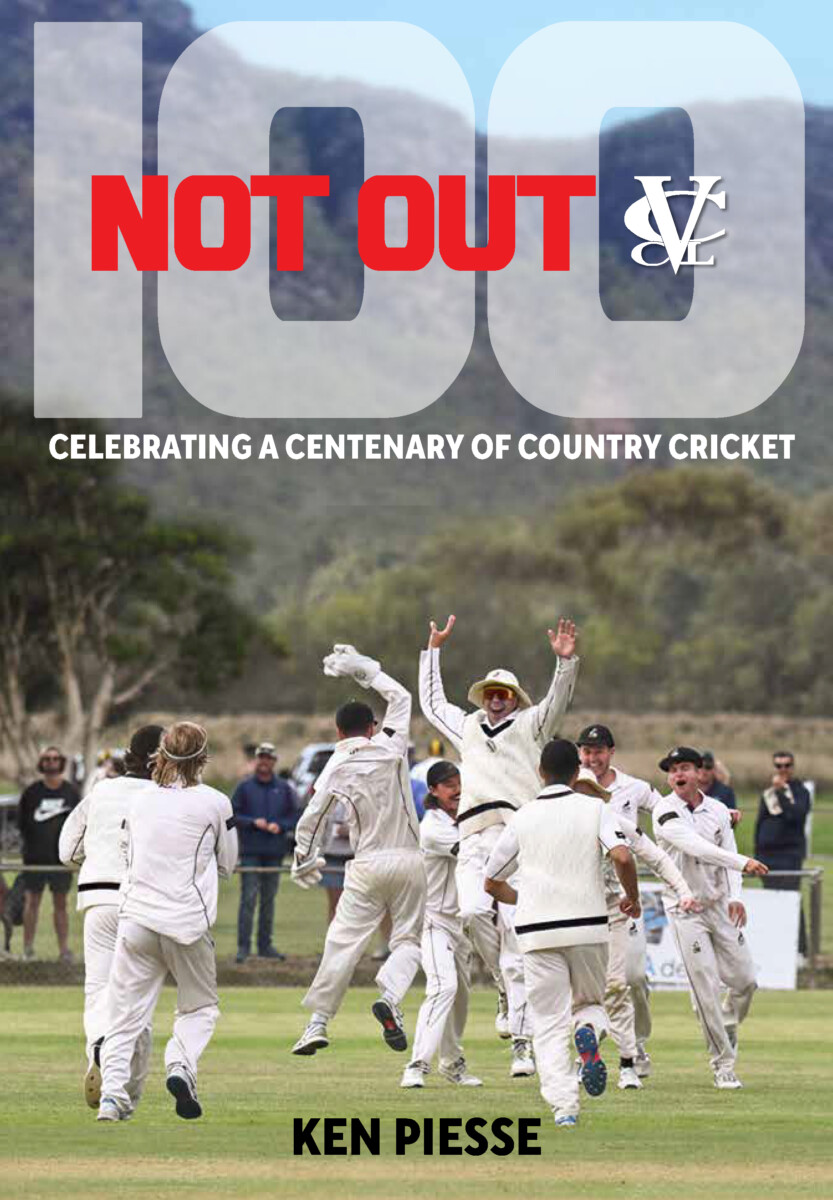
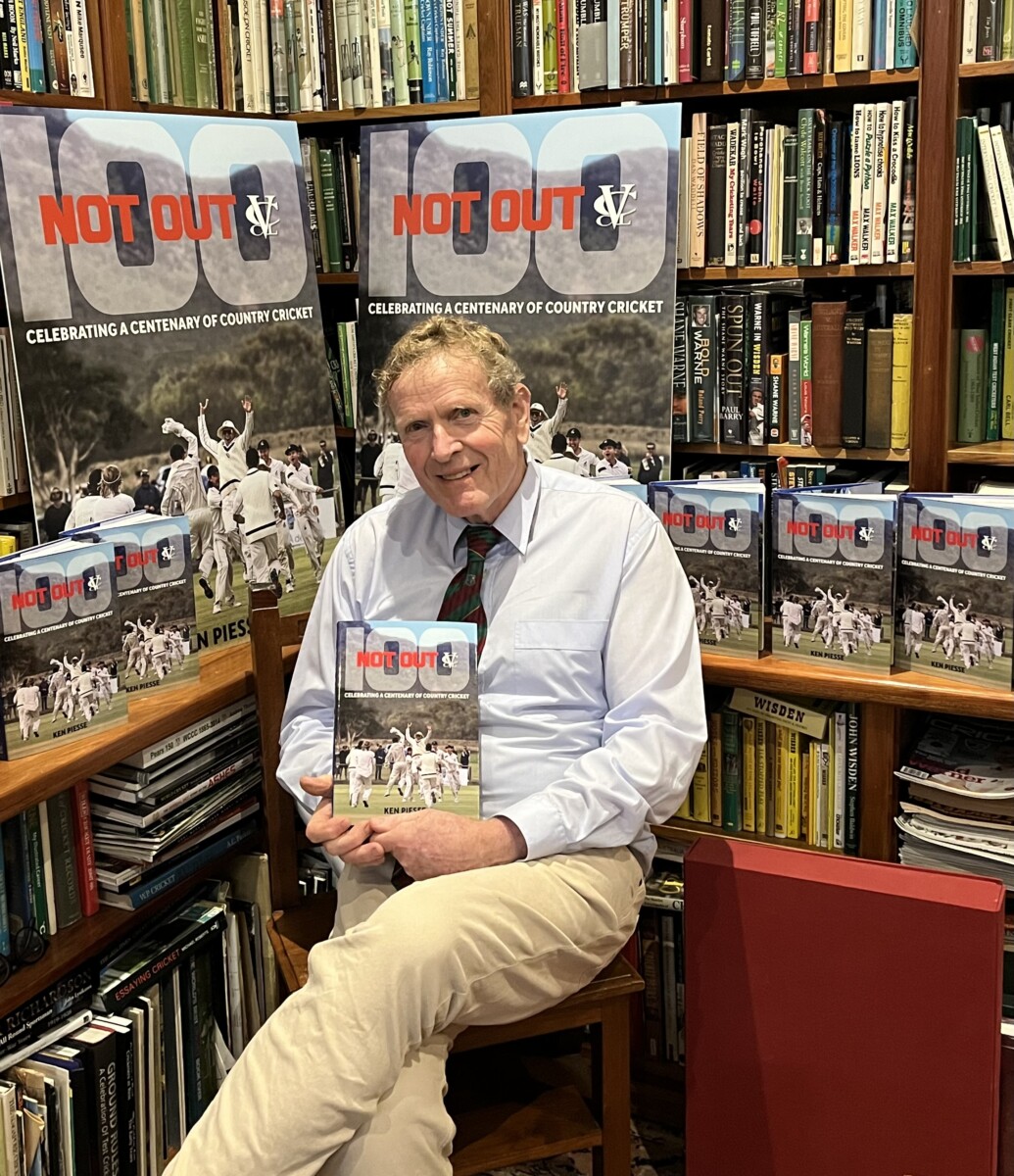
100 Not Out, celebrating a centenary of Country Cricket is the 71st cricket book. I have written, published or edited.
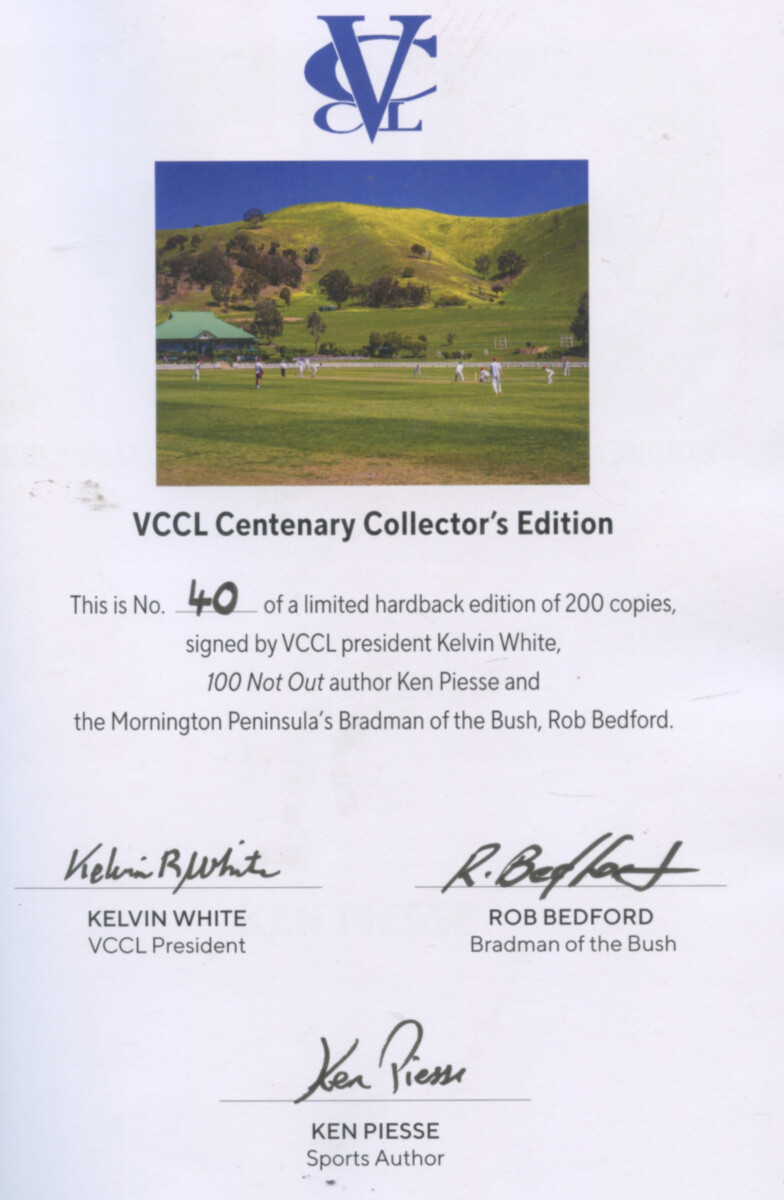
Just 200 copies of the autographed limited edition hardback were initially available. Less than 50 remain so do act now to order to avoid disappointment.
With almost 100,000 words, more than 350 pages and almost 70 photographs and cartoons, no sporting centenary history has been so detailed, comprehensive and so informative – yet so easy to read.
Available in both softback and hardback, I have exclusive rights to the limited edition signed and numbered hardback, autographed by ‘Bush Bradman’ Rob Bedford, Victorian Country Cricket League president Kelvin White and myself. The hardback costs $60 plus postage. The softback is $40.
SELL IN INFORMATION
About the Author
Ken Piesse is Australian sport’s master storyteller with an unrivalled 92 sporting books in his CV. For years he has been interviewing and writing about the cricket champions of the bush, those who came and conquered at Test level and those who stayed home and become household names throughout regional Victoria.
Still an active player on the Mornington Peninsula at 70 with Mt Eliza’s 6th XI, he has played at numerous bush venues from Bundalaguah to French Island, where he says the afternoon teas and Di Spark’s jelly slices are supreme.
President of the Australian Cricket Society for a record 17 years and a multi-media awardwinner, Ken was inducted into the Melbourne Cricket Club’s Media Hall of Fame in 1999 and became a Life Member of the Australian Football Media Association in 2011. He has been entertaining cruise ship passengers with his memoirs and anecdotes since 2016. His six decades of service to cricket was recognised by Cricket Victoria in 2026.
Few share his obsession or expertise for our national game, Shane Warne, Ricky Ponting, Adam Gilchrist, Matthew Hayden and Darren Lehmann among many household names to contribute forewords to his previous books.
Key selling points
- ‘100 Not Out’ includes an arsenal of entertaining stories and anecdotes centring on the Bradmans of the Bush, the most powerful teams, Melbourne Country Week and the Australian Country Championships all told in Ken’s easy-to-read conversational style.
- A dozen old bush champions have contributed personal memoirs.
- There are dozens of Tall Stories and True plus some accompanying cartoons by Australia’s leading sports cartoonist Harv
- Every Bush International from 1929 is detailed and the favourite cricketing sons of every town identified in a never-before-published who’s who.
- The 22 greatest country cricketers are named from Bodyline captain Bill Woodfull from Maryborough to the evergreen 40-year-old Peter Siddle from Morwell.
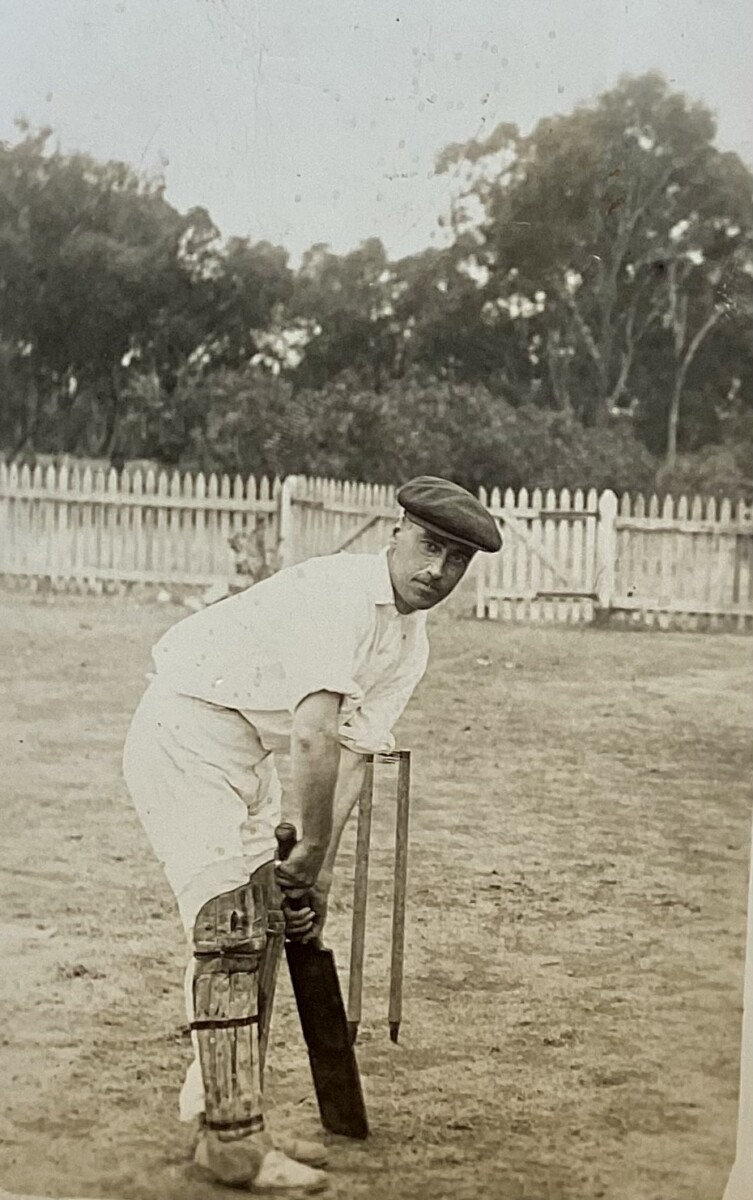
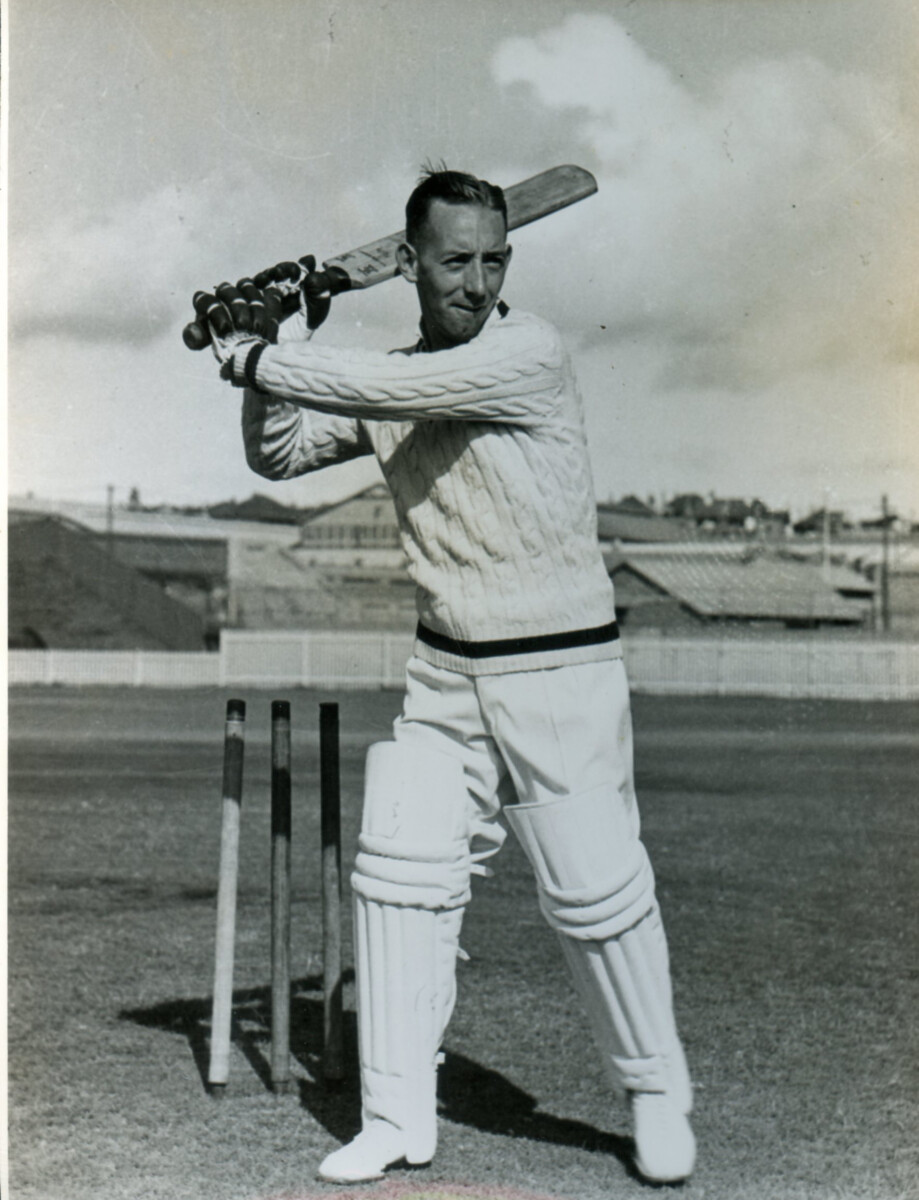
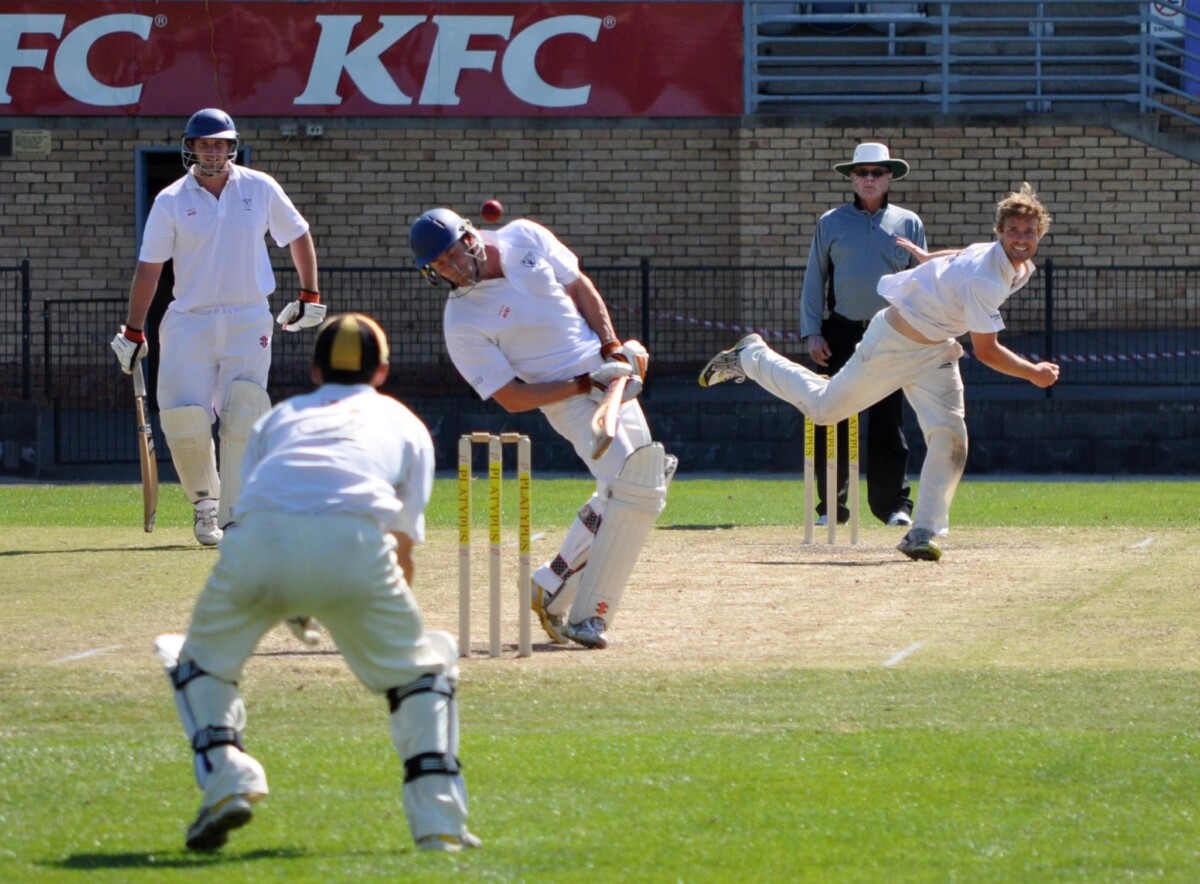
- And an array of almost 70 photographs included, both colour and black and white
About the book
Detailing 100 years of Victorian country cricket
- The Bradmans of the bush
- The Champion teams
- The Bush Internationals
- Melbourne Country Week
- All Australians
- And dozens of hilarious tall tales & true

Ken –
Reviewer: BARRY NICHOLLS
In the 1990s, there was a much-loved segment on Channel Nine’s iconic Footy Show highlighting the grassroots game in regional and otherwise-obscure suburban leagues. These were the days of scratchy VHS recordings, where one could sometimes see the fuzz on the TV screen when spectacular marks, heroic runs and the occasional absurdities of the amateur game were showcased.
Ken Piesse’s 100 Not Out, celebrating a Centenary of Country Cricket is more cerebral and informed and at times just as entertaining a cricket version.
While village cricket in England has inspired many books, there’s been far less written about cricket in the Australian ‘bush’. Most have been dry, uninspiring club histories, when the national game has long been serviced by a stream of wonderful country cricketers who ‘made good’.
Country Victoria, of which Piesse’s latest book is based, has produced dozens of Test players from the regions, including Bill Woodfull, Lindsay Hassett, Paul Sheahan, Ian Redpath and Merv Hughes.
Merv was just 15 when he attended his first Country Week carnival, the very first stepping stone into the Test team.
100 Not Out includes internationals like Merv, but its heart lies with the more unknown – country cricketers, families and clubs who played a dominant role and, in some cases, helped form unforgettable dynasties.
Communities in regional Australia have long been shrinking, with many of the young one shifting to capital cities – and Associations either merging or disappearing. But, as Piesse emphasises, a love of cricket endures. Generations have shown a remarkable resilience and love for the national game. The record, for example, of the Hopper family in and around Horsham is extraordinary.
Particularly enjoyable for me was the focus on the annual Melbourne Cricket Week, a five-day carnival held each February after harvest. MCW invariably recognised new talent, some being fast-tracked straight into first-class cricket with Victorian XIs. Finals were played at the MCG, a lifetime highlight for many.
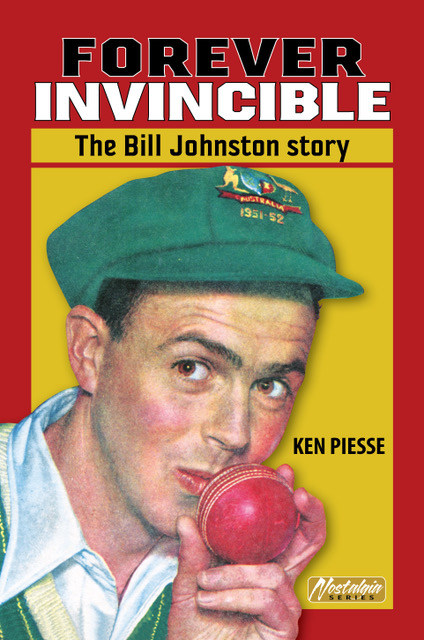
One of the champion country graduates was Bill Johnston, a left-arm bowler, both pace and spin, from tiny Beeac, near Colac. ‘Big Bill’ was double-jointed and had incredible strength in his hands from milking cows.
‘Blink, and you miss Beeac,’ says Piesse in an evocative chapter start. ‘It takes two minutes to walk from one end of town to the other. Don’t go there on a Monday or a Tuesday. Its only pub is closed. Yet it was the childhood home of a Victorian country cricket immortal, Bradman Invincible Bill Johnston.
‘Big Bill loved life, the western district and cricket. So did his older brother Allan. From a young age, they’d ride their horses to school, initially attending Ondit State School and from year 9, Colac High, where both were prefects.
‘Early in the New Year of 1938, representing Beeac CC, the brothers took all 10 wickets in an innings three matches in a row.
‘They were to be “discovered” by city scouts while representing Colac at Melbourne Country Week in 1939 … the bright lights of Melbourne were compelling, and the brothers left the family’s dairy farm at Ondit in the spring of 1939, making the then four-hour trip from Colac to the Big Smoke via steam train.’
The Johnston family were initially suspicious of their choose of clubs: Richmond, as it had a bar. They didn’t want their boys to fall in with the wrong crowd…
100 Not out also offers a snapshot of a time when combined country XIs faced star-studded touring sides in ‘Bush Internationals’. A half-holiday would be declared, guaranteeing a crowd of several thousand, including schoolchildren from across the regions. The one, two and three-day matches also gave country players the chance to forever ‘dine out’ on the day they took on the elite.
So fast was Horsham’s Rex Mackenzie one overcast day in Hamilton that MCC Ashes captain Mike Smith sent a message out for Mackenzie to be immediately rested or the match was off!
Years earlier, in the summer of 1932-33, debate raged around England’s unleashing of Bodyline. The tactics had a trickle-down effect into the bush. ‘The fury Australians felt at Douglas Jardine’s Bodyline tactics flowed from the Test fields to the most out-of-the-way communities,’ Piesse writes. ‘At Glenaladale, near Bairnsdale, one of the locals – an Englishman –was less than diplomatic at practice one night. ‘You Australians,’ he began, ‘are a pack of whingers. You cannot take a hiding.’
Not a word was spoken until the said gent, next into bat, was peppered with bouncers. After being hit in the ribs for a second time, he complained, and one of the Glenaladale lads said: ‘Who’s whinging now, mate?’
100 Not Out features also many must-read profiles. Ararat’s Henry Gunstone, the ultimate ‘Bradman of the Bush’, is described as ‘a sandy-haired teenager with an ability as a schoolboy to effortlessly hoist bowlers’ deliveries out of the ground’.
Gunstone recalled a story that could only happen in country cricket: describing one of his 129 centuries, including a 75-minute ton, on his own wedding day. ‘Luckily, we were batting,’ he said. ‘Back then we’d start at 1.30pm. It was a 3pm wedding and I made it with a few minutes to spare, taking two groomsmen with me!’
After six years in Melbourne – most with South Melbourne cricket and football clubs) – Gunstone returned home to help his ill father-in-law on the family’s dairy farm. He later entered local government, serving in a sports and recreation role and becoming instrumental in establishing Ararat’s link to its Chinese heritage.
100 Not out concisely distils a long and at times complex history of cricket in regional Victoria while successfully capturing the eccentricity and warmth of the game and its players. It is Piesse’s 71st cricket book. Can’t wait for No.72.